About Us
Musculoskeletal Genomics Research Group
We integrate statistical genetics, cellular transcriptomics, and mathematical modelling to reveal the molecular and cellular mechanisms underlying musculoskeletal diseases and human skeletal biology.
About Us
We integrate statistical genetics, cellular transcriptomics, and mathematical modelling to reveal the molecular and cellular mechanisms underlying musculoskeletal diseases and human skeletal biology.
The focus of the Musculoskeletal Genomics Research Group is to combine information from statistical and molecular genetics studies to identify high potential drug targets for treating patients with osteoporosis. The Research Group has a strong emphasis on multidisciplinary and collaborative research. Its recent studies provide evidence that mice and fish are valuable preclinical models for identifying cellular and genetic determinants of human skeletal health.
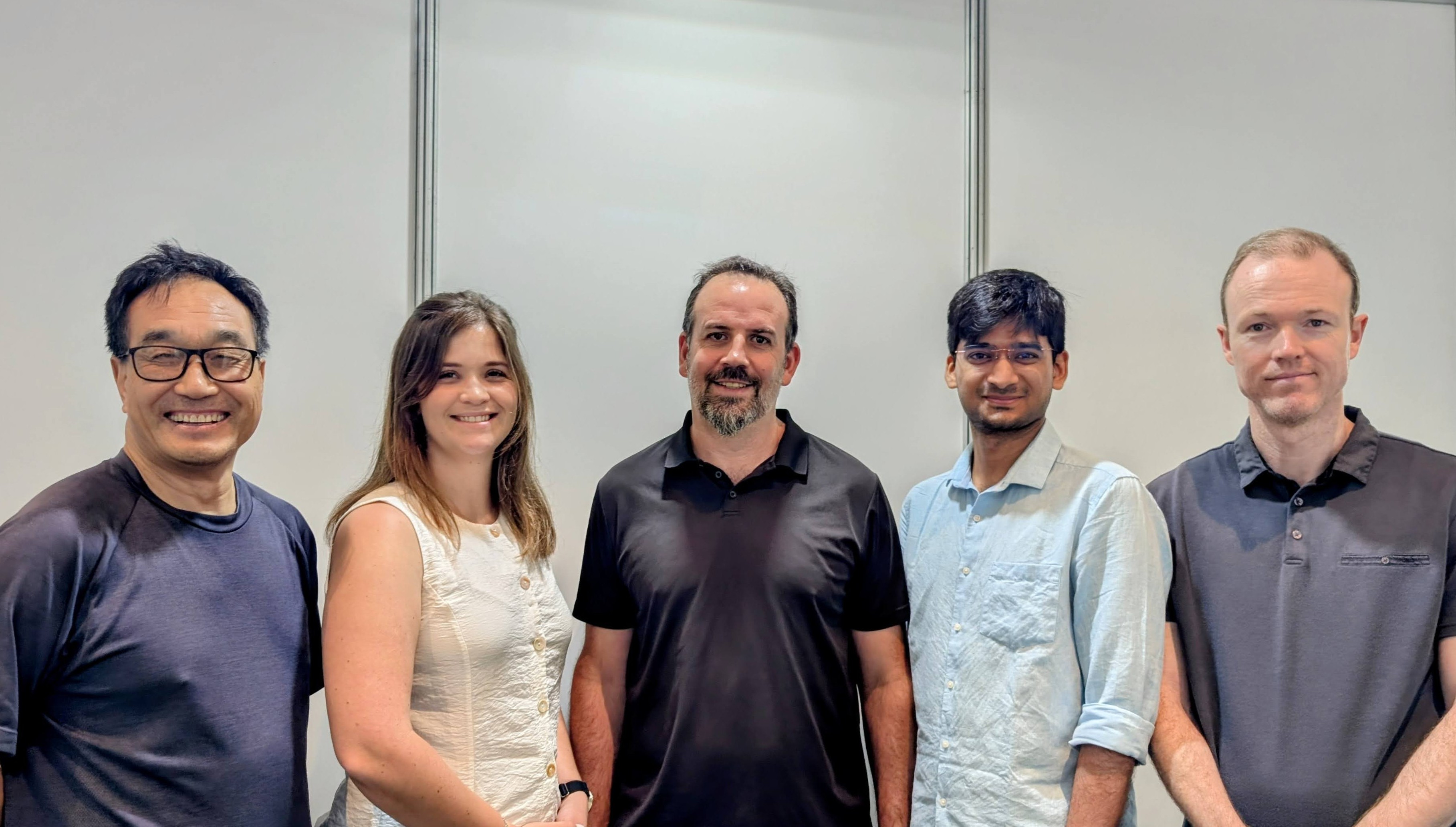
Group leader A/Prof. John Kemp is a National Health and Medical Research Council Emerging Leadership Fellow with an interest in genetic epidemiology of musculoskeletal disorders. A/Prof. Kemp’s research vision is to accelerate drug development for patients with osteoporosis. To achieve this vision, he has established the Musculoskeletal Genomics Research Group at Mater Research. Under his guidance, the group is developing innovative ways to combine information from statistical and molecular genetics studies of the skeleton to identify genes that represent drug targets for treating patients with osteoporosis. Research undertaken by the group is multidisciplinary, and benefits from established collaborations with clinical specialists, as well as with molecular and cell biologists within and outside of Mater Research.
Bone mineral density, trabecular bone score, bone fracture, etc.
Abdominal aortic calcification, coronary artery calcification, etc.
Genome-wide association studies, meta-analysis, fine-mapping, etc.
Mendelian Randomisation, genetic correlations, gene-set analysis, etc.
Cell atlases of human bone, murine bone, and zebrafish scales, gene programmes identification, etc.
Gene network modelling, cellular and functional annotation of networks, etc.
Article
Trabecular bone score (TBS) is a texture-based measurement derived from DXA scans, which describes the distribution of mineral across the vertebral bodies. Identifying its genetic determinants is crucial for enhancing understanding of its biological basis and clarifying its relationship with fracture risk...
WebTool
This interactive platform is designed to integrate information from (i) a genome-wide association studies (GWAS) of bone mineral density (BMD), (ii) gene expression data from individual bone and marrow cells isolated from mice, and (iii) extensive skeletal phenotyping data from human and murine mutant databases. By triangulating information from these complementary datasets, this platform can...